By Dr. Ismael Vivanco
Superintendent, NWESD 189
Special education continues to be a critical component of our work. While overall enrollment is declining in many of our districts, we are experiencing an increase in the number of students who require additional special education services throughout our region.
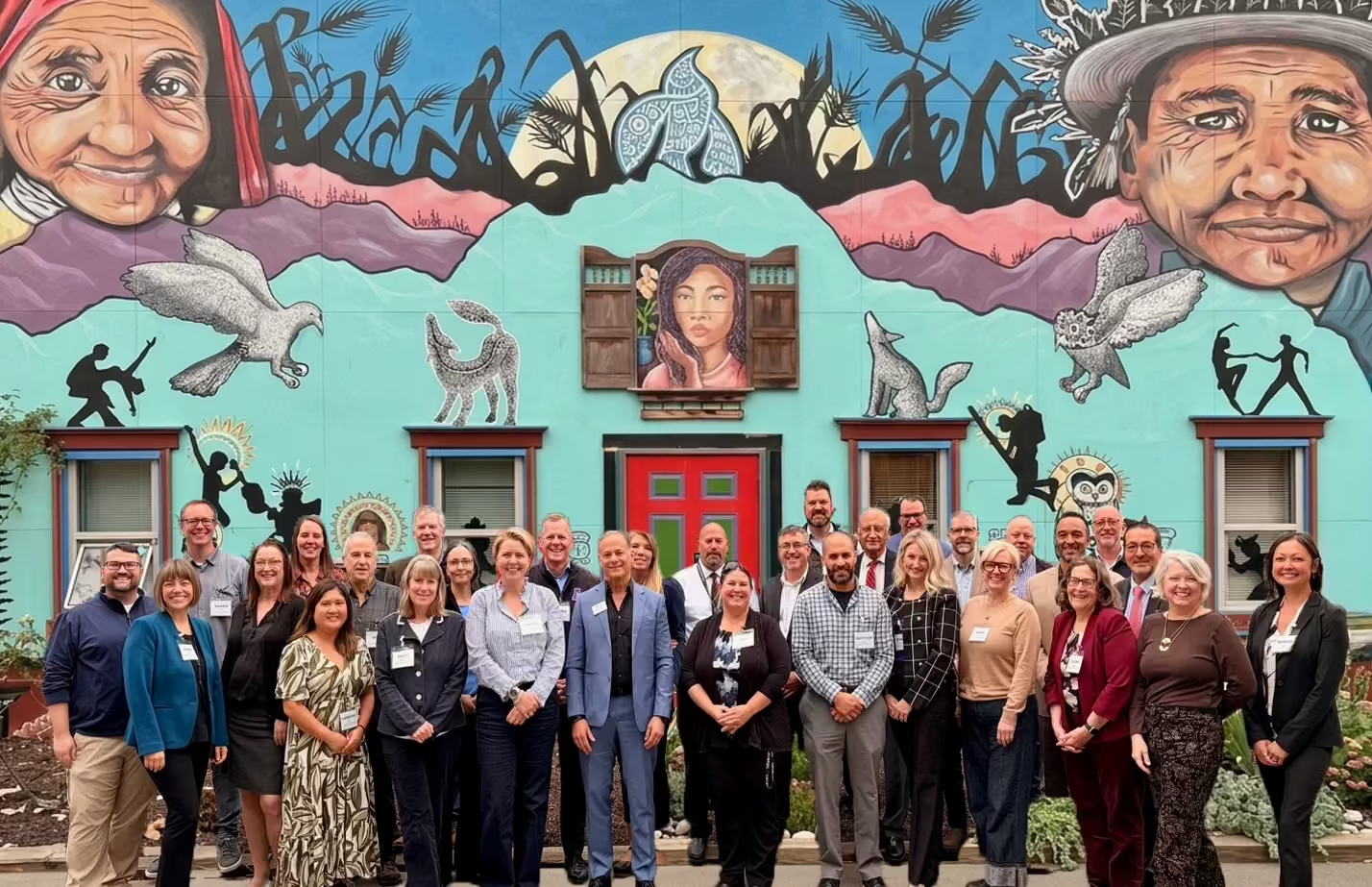
Recently we dedicated a Superintendents’ Advisory Council (SAC) meeting to special education. Leaders from across the region came together to share effective practices, discuss ongoing challenges, and identify opportunities to continue learning from one another.
During a roundtable session led by Dr. Michelle Roper, NWESD Director of Special Programs and Services, participants rotated through four discussion topics: paraprofessional needs, Technical Assistance Papers (TAP), service delivery models, and student self-determination and agency. Discussions were facilitated by Dr. Rachel Summers (Edmonds), Lissan Wipfli (Lakewood), Marta Bloomquist (NWESD), Tony Smith (Sedro-Woolley), Maureen Lyden (Burlington-Edison), and Kristen Koehler (Anacortes).
It was an energizing session, with leaders and thought partners leaning on one another, sharing their experiences, and exploring resources that can make a meaningful difference for students. It was especially valuable to have regional leaders guiding these discussions, creating space for colleagues to learn from one another and share practical insights from their own districts. I am deeply appreciative of their time, expertise, and willingness to facilitate these conversations in support of our collective growth and continued improvement.
Tools shared included paraeducator workforce tracking resources, student IEP input forms, and guidance on specific state laws. These conversations reflected a strong commitment to student-centered solutions and the importance of sharing what works so that successful strategies can be replicated across districts.
Funding challenges in special education remain significant. In the 2024-25 school year, $531 million in special education expenses were left unfunded by the state, according to the Washington Association of School Administrators (WASA). Even with a modest 6% increase in state funding, districts are still navigating a substantial gap while working to meet the needs of every student.
Learn more about what the state covers, and what it doesn’t, at www.waschoolfunding.org.
The role of the NWESD is to help bridge gaps and strengthen systems. We do this by partnering closely with districts, providing technical assistance, professional learning, and coordinated support that build local capacity. Under the leadership of Dr. Michelle Roper, our Special Programs and Services team works alongside district staff to develop practical solutions and provide leadership and supplemental supports. This includes targeted learning opportunities, such as an upcoming April 16 training focused on supporting teachers and paraeducators in special needs classrooms.
Learn about NWESD Special Programs and Services.
I recently spoke with Lissan Wipfli, Executive Director of Special Education at Lakewood School District, about how special education is evolving. She shared that districts are seeing a growing emphasis on inclusion, with more students supported in general education settings, alongside increasing complexity in student needs across behavioral, social-emotional, and academic areas. At the same time, many districts are navigating staffing challenges and experiencing growth in special education enrollment.
In response, districts are strengthening data-driven practices, investing in early intervention, and building more robust multi-tiered systems of support. As Wipfli noted, partnerships with NWESD play an important role in this work:
“NWESD supports our work by providing professional development and training for staff, offering specialized services and consultation, including behavior, speech, and occupational and physical therapy, and helping ensure compliance with best practices in special education. They also facilitate collaboration across districts, allowing us to share resources and strategies. This partnership strengthens our capacity and helps keep us aligned with state and regional expectations,” she said.
Learn about how NWESD is working with our district partners to support Multi-Tiered System of Supports (MTSS).
She also emphasized an essential truth: strong relationships are at the heart of effective special education.
“As our community grows, we must plan thoughtfully to meet increasing needs without compromising the quality of support our students deserve. Inclusion benefits all students, and early, proactive support makes a lasting difference. Ultimately, this work is about equity, ensuring every student has access to the opportunities and supports they need to succeed.”
I know the work isn’t easy, but it matters. I appreciate the partnership, dedication, and shared commitment across our region. NWESD is committed to walking alongside our districts to ensure every student has access to high-quality education and the support they need to thrive.