
Academic Supports
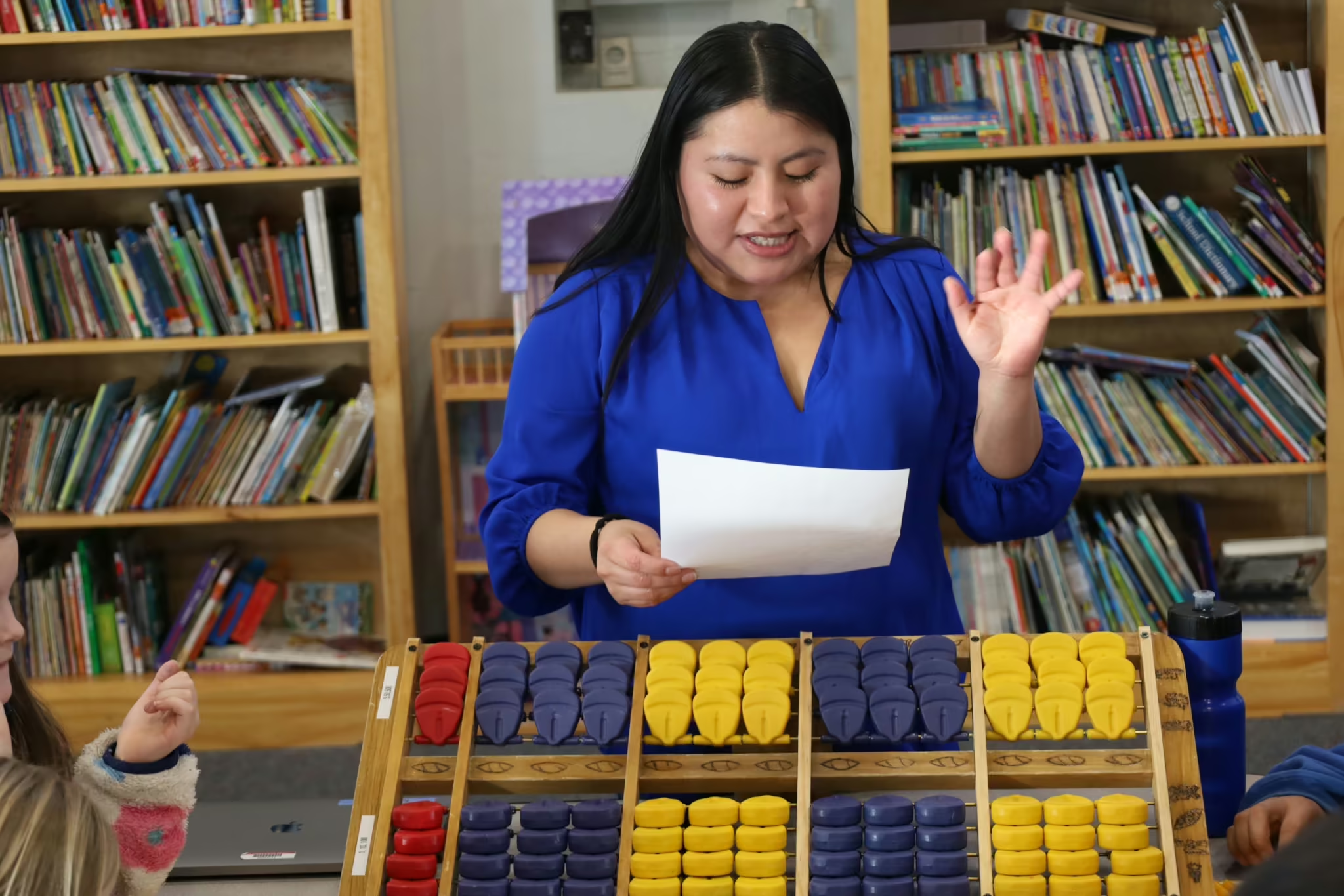
The NWESD Migrant Education Program offers professional learning and resources for migrant educators, including teachers, paraeducators, migrant graduation specialists/student advocates, migrant recruiters/record clerks, preschool staff, administrators, and federal program directors.
- Course: Migrant 101 – Foundations of Migrant Education. Contact Enrique Lopez for more information
- Course: Migrant 201 – More specific and practical approaches to engage your migrant students. Contact Enrique Lopez for more information
- Funds of Knowledge Toolkit
- Cultural Capital
- Dreamfields- A Peek into the World of Migrant Youth
- Contact your local ESD for additional educational support. Remember there are specialists in math, science, English language arts and inclusionary practices.
School Resources
School success and the road to graduation begin with our students’ first experiences as learners. Our migrant early learning and family engagement coordinator offers a Migrant Education 101 course specific to early learning. This course supports early learning programs to improve offerings and access for migrant preschool-aged students and their families.
Contact Ana Mendoza Or Enrique Lopez for more information.
For more information about NWESD’s early learning services, please visit NWESD Early Learning.
MIGRANT GRADUATION SPECIALIST (MGS) :
The migrant graduation specialist through Active and Responsive Case Management will provide supplemental support and advocacy, in coordination with school counselor(s) and other school student support teams, that address the needs of migrant students to successfully transition to next grade level; complete high school; re-engagement of recent drop out and Out of School Youth and pursue postsecondary education or employment.
THE SPECIALIST WILL:
1.Implement a case management model focused on providing supplemental support and intervention strategies to address the unique needs of migrant students. 1 FTE = 50 students Prioritize PFS (Priority for Service) and Needs Students
2.Work with the district’s Migrant Education Federal Programs director and school staff to identify and establish program and student goals in alignment with the district’s local plan and the State Service Delivery Plan.
3.Coordinate and ensure access to other services migrant students may be eligible and entitled to receive.
4.Facilitate re-engagement of recent drop out and address needs of out of school youth.
MGS FTE Caseload Formula Recommendation:
To know your student caseload is very important as you begin to become familiar and identify the migrant students you will be working with throughout the year. First step, know how much Full Time Equivalency (FTE) you are allocated to your MGS position by contacting your Federal Program Director (FPD). Then use the formula below to help you identify how many students will be in your caseload.
1 FTE or 40hrs a week=50 students
.75 FTE or 30hrs a week=37 students
.50 FTE or 20hrs a week=25 students
.25 FTE or 10hrs a week =12.5 students
MGS Online Reporting Is used for you to report your direct services to migrant students through your Migrant Graduation Specialist position. The services you provide should be aligned to what was approved on the EGMS Migrant Education application. How often should you report your services online? We highly recommend that you complete once a week or every other week so that you do not fall behind in your reporting.
MIGRANT STUDENT ADVOCATE (MSA) :
The migrant student advocate will monitor, connect, coordinate, provide referrals and facilitate the academic and support needs of migrant students with school counselor to successfully transition migrant students to the next grade level, complete high school, and promote the transition to postsecondary education or employment.
MIGRANT OSY ADVOCATE
Migrant “out-of-school youth”, ages 16-21, are entitled to a free public education in the State of Washington and enrollment in school is not a condition affecting eligibility for the MEP. Therefore, out-of-school youth who meet the definition of a “migratory child” are not only eligible for the MEP, but districts are responsible for drafting a plan to reach out and serve the migrant OSY in their school district.
UNDERSTAND YOUR ROLE
Your Federal Program Director has created a plan to serve OSY, make sure you understand your role within that.
Sit down with your Federal Program Director (FPD) and take a look at the Out-of- School Youth section of your Title 1 Part C Grant. Familiarize yourself with this plan and the support you are expected to provide.
- IDENTIFY; run the OSY Online Services Report in MSIS
- OUTREACH; ensure outreach is multifaceted as no two OSY are the same
- ASSESS NEEDS; ensure you have a method of assessing needs holistically
- SERVE; familiarize yourself with the MEP Supplemental Service definitions
- REPORT; Ensure plan for reporting notes and services in MSIS (see below)
OBTAIN ACCESS TO OSY TAB IN MSIS
The OSY Tab gives you access to logging case management notes and services to OSY in MSIS!
Ensure that you have been identified as an OSY Advocate for your district in the MSDRS Directory. This needs to be approved by your FPD. The OSY Tab is the method for reporting Migrant OSY case management notes in MSIS.
What resources exist for serving migrant Out-of-School Youth?
RESOURCES
- Migrant Education OSY Manual
- iSOSY – National repository of resources and materials to address the needs of migratory youth.
PARTNERS
Western Washington offers numerous opportunities for youth aiming to complete a high school diploma, GED or enter a career training program. The partners offer unique opportunities all students should be aware of.
JOIN THE WASHINGTON MIGRANT OSY ADVOCATE NETWORK
Join a Professional Learning Community of leaders across our state who share the vision of helping Migrant OSY reach their goals! Below you will find the contact information for your ESD 189 Migrant OSY & Health Coordinator. They can support you in networking with other Migrant OSY Advocates.
We can connect you to services:
- Educational Resources: High School Diploma or GED; ESL Classes, Certification or Training.
- Social and Health Services: Health, Dental, Vision, Social and Behavioral Health referrals as well as case management.
- Other Non-Academic Case Management: Practical Survival Skills
- Employment Opportunities and job training: Work Skills preparation, career exploration, and assessment to identify long and short-term employment goals.
- Information regarding educational scholarships
- For more information, please contact Enrique Lopez or Tracy Gasca